


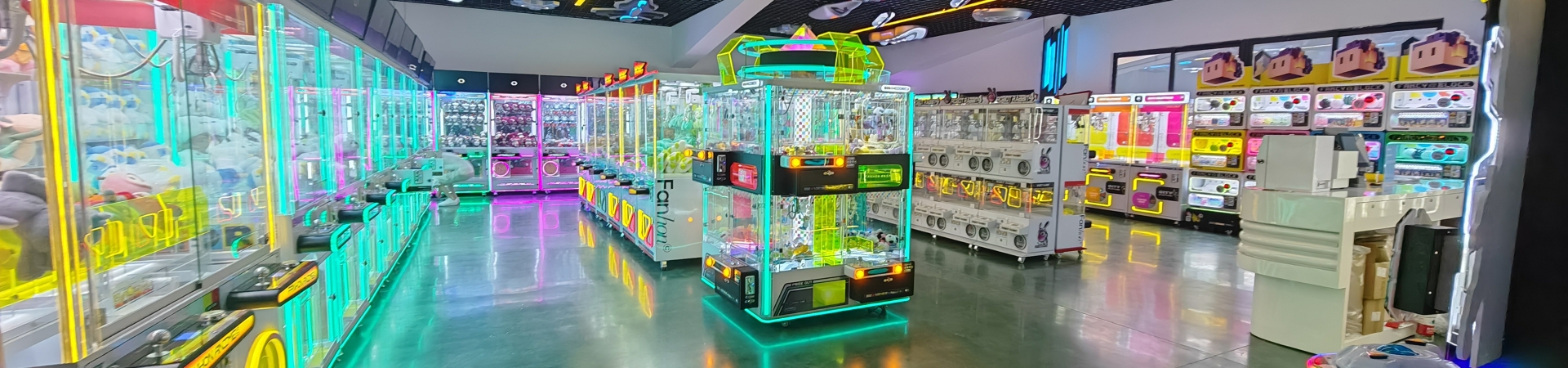
The claw arcade business has always been a popular investment option for new entrepreneurs and small-scale investors, thanks to its low entry barriers, simple operation mode and passive revenue potential. As offline leisure consumption rebounds globally, claw machine arcades in shopping malls, pedestrian streets and commercial complexes have achieved rapid layout and growth. Yet despite its market popularity, the business comes with overlooked hidden risks that can lead to reduced profits, operational disruptions and even legal penalties. This targeted claw arcade business risk assessment analyzes four core risk dimensions in the current industry and delivers feasible mitigation solutions for investors and on-site operators.

Legal compliance risk ranks first among core threats to long-term arcade operation. Amusement industry regulations vary significantly across regions, with strict rules governing claw machine prize values, winning odds transparency, minor access control and gambling risk boundaries. A large number of novice operators pursue quick profits while ignoring industry compliance standards, failing to publicize official winning probabilities or exceeding local prize value limits. Such irregular operations are prone to regulatory inspections, mandatory rectification and temporary business suspension. Additionally, the blurred boundary between skill-based entertainment and chance-based gambling further amplifies compliance risks, especially for unattended 24-hour claw arcade venues with high-value prizes.
Operational and market risks are the main causes of unstable revenue for claw arcade projects. The industry suffers from serious homogenization, with most venues adopting identical machine equipment and conventional doll prizes, lacking unique selling points to attract repeat customers. Different from fixed consumer businesses, claw arcades rely entirely on real-time pedestrian flow, making revenue highly vulnerable to seasonal changes, holiday cycles and surrounding business vitality. In addition, the continuous influx of new investors intensifies regional market competition. Blind site expansion and homogeneous operation squeeze overall profit margins, leading to the gradual elimination of small, unstandardized claw arcade stores.
Financial and cost risks are easy to underestimate in early investment planning. High-traffic commercial locations require stable rental costs, while daily equipment maintenance, regular prize replenishment and occasional machine failures generate continuous operating expenses. Most new investors overestimate passive earnings and ignore comprehensive operational costs, resulting in tight capital flow and even investment losses. Meanwhile, the adjustable winning rate brings persistent operational dilemmas: overly strict settings damage player experience and reduce customer flow, while loose settings raise prize costs, making it hard to maintain a stable profit balance for long-term operation.
User and public opinion risks also pose potential threats to brand and venue operation. The unique psychological temptation of claw machines easily triggers impulsive and repeated consumption, particularly among minors. Excessive unregulated consumption may attract public supervision and stricter industry policy adjustments. Once negative incidents such as false winning probability settings and misleading minor consumption occur, venues will face bad reputational damage, customer loss and sustained operational pressure.
To defuse the above risks, operators need to build a standardized, refined operation system. First, fully comply with local amusement industry regulations, complete operational licensing, and transparently display winning rules and prize standards to eliminate compliance hazards. Second, break industry homogenization through themed venue upgrades, customized trendy prizes and interactive gameplay optimization to enhance user stickiness and repurchase rates. Third, implement scientific cost control, adopt small-scale trial operations for new sites to verify profitability before large-scale investment, and reduce unnecessary cost waste. Fourth, formulate standardized user management rules to restrict minor excessive consumption and avoid public opinion risks.
Overall, the claw arcade business is not a low-risk, high-return effortless project. Its sustainable profitability depends on compliant operation, differentiated market competition and refined cost management. Conducting a professional and comprehensive claw arcade business risk assessment before investment and daily operation is essential to avoid common industry pitfalls and achieve stable long-term development in the competitive offline amusement market.