

Planning to open a physical claw machine shop in 2026? The very first question every new business owner asks is straightforward: how much budget do you truly need to launch a profitable claw shop? Most beginner entrepreneurs fall into two common pitfalls — overspending on fancy, unnecessary renovations or overlooking hidden startup costs — both of which lead to cash flow shortages in the critical early operational stage. Drawing on real industry data, years of offline store operation experience, and the latest 2026 market pricing standards, this guide breaks down a practical, tiered claw shop startup budget for three mainstream store types: mini trial stores, standard street retail stores, and high-end mall flagship stores. This detailed breakdown will help you make data-backed investment decisions and avoid costly startup mistakes.
A well-planned claw shop budget separates all expenses into one-time pre-opening fixed costs and short-term operational reserves, eliminating blind investment and excessive capital occupation. Overall, the total startup cost for a fully functional claw shop ranges from $12,000 to $45,000, covering all store scales, location tiers, and brand positioning needs. Below is a complete itemized cost breakdown and actionable cost optimization strategies for new entrepreneurs.
1. Core One-Time Startup Costs (60%–70% of Total Budget)
Accounting for 60% to 70% of total startup spending, one-time fixed costs are mandatory pre-opening investments that require no repeated spending in the short term. This category covers core equipment, store renovation, initial product inventory, and intelligent system deployment, laying the foundation for official store operation.
Claw Machine Equipment: The Largest Fixed Expense
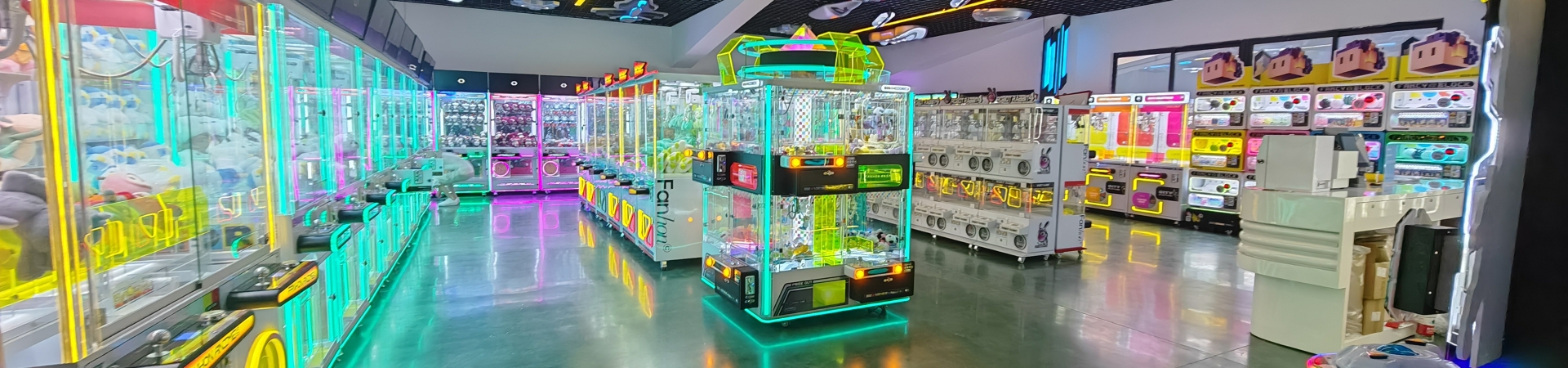
Claw machines are the core assets of your shop, and their quantity, quality, and functionality directly determine customer appeal, user experience, and long-term profit potential. Per industry-standard layout for a 50㎡ retail store, equipping 12 to 15 claw machines is ideal — this configuration delivers diverse gameplay options while fully accommodating daily customer flow.
As of 2026, mainstream smart code-scanning claw machines — the most cost-effective option for new stores — are priced at $800 to $1,200 per unit. For mini trial stores with 8–10 machines, total equipment costs run $6,500–$9,000. Standard stores with 12–15 mid-tier machines require $9,500–$14,000 in equipment investment. High-end mall flagship stores with customized lighting, branded logos, and themed machine designs cost $15,000–$20,000 for full equipment setup. We strongly recommend smart networked machines, which support mobile scan-to-pay, real-time background data analytics, and remote difficulty parameter adjustment, drastically cutting daily manual operation labor costs.
Store Decoration & Facility Configuration
Claw shop branding relies on a youthful, vibrant, and immersive atmosphere, yet extravagant renovations are entirely unnecessary and wasteful. Renovation expenses vary significantly based on store location and square footage. Ordinary street-side and community stores follow a cost-effective renovation standard of$120–$180 per square meter, while mall-located stores with unified brand style requirements command slightly higher pricing.
A standard 40–50㎡ claw shop budgets $2,000–$4,000 for full renovation, including themed wall decor, ambient lighting, floor paving, and customer rest areas. Additional supporting infrastructure — such as security monitoring systems, circuit upgrades, and safety guardrails — adds another $800–$1,500 in costs. Unlike F&B businesses, claw shops require no complex ventilation, piping, or kitchen facilities, resulting in low renovation thresholds and minimal upfront construction costs — a key competitive advantage of this business model.
Initial Doll & Gift Inventory
High-quality, diverse prizes are critical to customer retention and repeat business. Generic, low-quality dolls and monotonous prize selections will quickly drive away customers and reduce repurchase rates. Initial inventory should cover plush dolls, trendy decorative ornaments, mini novelty toys, and popular lifestyle gifts, matching different machine difficulty levels and catering to diverse age groups and consumer preferences.
The recommended initial stocking budget for a standard claw shop is $1,000–$2,500. Adopt a tiered prize matching strategy to balance appeal and cost: allocate 30% of inventory to premium trendy dolls to attract young core customers, and 70% to cost-effective classic plush toys and daily gifts to control overall stocking expenses. Claw shop inventory features fast turnover, so overstocking is never required, effectively eliminating inventory backlog and capital waste risks.
2. Site & Pre-Opening Operating Costs (20%–25% of Total Budget)
Accounting for 20% to 25% of total startup funds, location-related and pre-opening operational costs are flexible expenditures that fluctuate by city, district, and store tier. These variable costs are the primary cause of budget differences between individual claw shops.
Rent & Deposit
Store location directly determines baseline foot traffic and revenue potential. Community and campus-adjacent stores are ideal for low-cost trial operations, with monthly rent ranging$300–$800. Pedestrian street and community commercial district stores deliver stable passenger flow, with monthly rent of $800–$1,500. High-traffic shopping mall locations offer maximum exposure and customer volume, with monthly rent rising to $1,500–$3,000.
Most commercial lease agreements follow a standard “3 months rent + 1 month deposit” payment term. For mini trial stores, the total pre-opening rent and deposit reserve is $1,200–$3,000, while standard and high-end stores require $3,000–$8,000 in reserved rental funds. For new entrepreneurs, short-term 1–2 year lease contracts are highly recommended to avoid long-term binding risks and preserve capital flexibility.
System & Pre-Opening Operation Fees
Modern claw shop operations rely on smart management systems to reduce manual workload and improve profitability. Core system functions include real-time data tracking, customer membership programs, scan-to-pay integration, and automated revenue statistics. Most reputable machine manufacturers provide free basic system access with equipment purchases. Only customized branded system upgrades require an annual service fee of $200–$500.
Additional pre-opening preparatory funds of $500–$1,000 cover all necessary preliminary work, including social media pre-promotion, in-store equipment debugging and trial operation, and official business license application and qualification registration.
3. Working Capital & Risk Reserve (10%–15% of Total Budget)
Insufficient working capital is the top reason for new claw shop operational failures. Every new store needs reserved liquid funds to sustain the initial low-traffic running-in period and cope with unexpected operational emergencies. We recommend reserving capital equivalent to 1–2 months of full operational costs.
This risk reserve is mainly used for daily prize replenishment, routine equipment maintenance, minor store repairs, and temporary part-time labor costs. Mini trial stores require a $1,000–$1,500 working capital reserve, while standard and high-end stores need $1,500–$3,000. This buffer fund effectively prevents capital chain breaks and ensures stable store operation during the early profit cultivation stage.
4. Three Tiered Startup Budget Solutions for Selection
Based on comprehensive industry cost data and actual operational feedback, we’ve sorted out three refined, tiered startup budget solutions tailored for entrepreneurs with different capital scales and business goals:
Mini Trial Store (Total Budget: $12,000–$18,000): Spanning 30–40㎡ and equipped with 8–10 entry-level smart claw machines, this store type is typically located near residential communities and campuses. It features ultra-low investment risk and fast market trial-and-error cycles, making it the perfect choice for novice entrepreneurs with limited startup capital.
Standard Profitable Store (Total Budget: $20,000–$30,000): Covering 40–60㎡ with 12–15 mid-tier smart machines, this street-side commercial district store balances investment cost and profit margin perfectly. It delivers stable monthly cash flow and sustainable revenue growth, standing as the most mainstream and mature operation model in the current market.
High-End Flagship Store (Total Budget: $35,000–$45,000): At 60㎡ or larger, this flagship store features 15+ customized themed claw machines and occupies core shopping mall locations. With strong brand appeal, high customer unit price, and premium profit margins, it is designed for long-term brand building and large-scale commercial operation.
Final Thoughts
Overall, the claw machine shop is a low-threshold, light-asset business with stable cash flow and low operational risk, requiring no excessive upfront investment. A scientific startup budget always focuses on three core priorities: intelligent equipment configuration, reasonable location matching, and sufficient working capital reserves, rather than blind luxury renovations and excessive inventory stocking. For most new entrepreneurs, launching a standard $20,000–$30,000 profitable store is the most rational startup strategy — verify the local market profit model with stable daily operations first, then expand store scale and upgrade brand positioning step by step.