


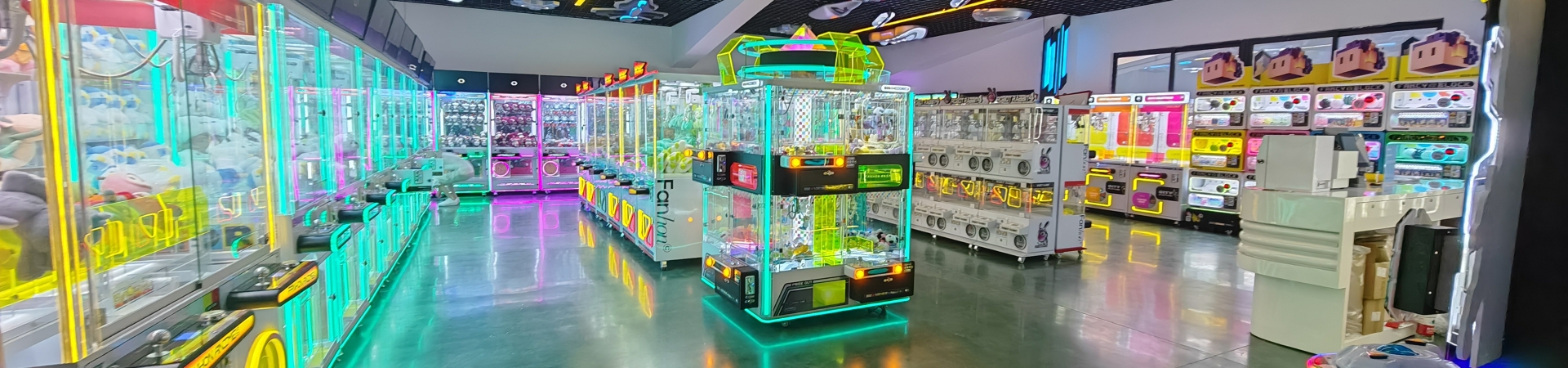
Starting an overseas claw machine shop has become a top low-investment high-return business for cross-border entrepreneurs in 2026. As a trending casual entertainment project favored by global young audiences, claw machine stores feature simple operation, flexible site selection, and sustainable profit space. However, most new investors lack clear cost cognition, often facing excessive investment, hidden expenditure losses and prolonged return on investment cycles. To help you accurately budget and avoid startup risks, this article comprehensively analyzes all costs of opening an overseas claw machine shop, including one-time startup fees, recurring operating costs, and graded investment solutions, providing authoritative guidance for your cross-border entertainment business layout.
Core Upfront Investment Costs (One-Time Expenses)
One-time upfront investment is the core expenditure for launching an overseas claw machine shop, covering equipment procurement, store rental deposit, interior decoration, system authorization, business licensing, and initial prize inventory. Based on 2026 global arcade industry investment data, the total one-time budget for a standard overseas claw machine store ranges from$30,000 to $90,000, fluctuating with store scale, location and equipment grade.
1. Claw Machine Equipment Procurement
Equipment procurement occupies the largest proportion of startup costs and determines the store’s operational stability and customer experience. Overseas commercial claw machines are divided into three mainstream types with clear price gaps. Mini desktop claw machines, priced at $300–$1,200 per unit, are suitable for mall pop-up booths and small counter layouts. Standard single-player commercial machines, the mainstream choice for physical stores, cost $1,200–$3,800 each, supporting multi-currency and contactless payments, with adjustable win rates and stable hardware, ideal for long-term overseas operation. High-end customized themed machines with brand logos and RGB lighting cost $3,900–$8,500 per unit, with personalized customization bringing a 12%–18% cost premium.
A 20–30 square meter standard claw machine shop needs 8–15 devices, with total equipment costs hitting $15,000–$45,000. For novice investors pursuing cost control, certified refurbished commercial claw machines are a cost-effective option. Priced at $500–$800 per unit with professional testing and stable performance, they cut equipment investment by nearly half, perfectly fitting overseas market trial operation.
2. Store Rental & Security Deposit
Store location directly affects foot traffic, conversion rate and overall profitability, causing huge rental differences across regions. Prime locations such as shopping malls, downtown commercial streets and tourist attractions boast stable high traffic but higher costs, with upfront rent and security deposits totaling $5,000–$20,000. In contrast, community street shops and suburban pop-up stores have lower entry thresholds, with initial rental expenses of $1,500–$4,000. Most overseas landlords require a deposit of one to two months’ rent plus the current month’s rent, which is a mandatory upfront cost for store leasing.
3. Interior Decoration & Store Setup
Modern consumers pay attention to immersive shopping experience, so store decoration is a key investment to enhance customer stickiness and social media exposure. Basic decoration includes floor paving, wall finishing, store signage, functional lighting and prize display areas, costing $5,000–$15,000 for simple minimalist styles. Trendy themed decoration with neon lights, cartoon murals and interactive layouts creates highly shareable scene effects, priced at $15,000–$25,000. Exquisite store design effectively extends customer stay time, boosts word-of-mouth communication, and significantly improves repeat consumption rates.
4. Management System & License Fees
An intelligent arcade management system is essential for low-labor standardized operation. A full-featured system integrates contactless payment, real-time data monitoring, remote win rate adjustment and member management functions, costing $5,000–$8,000 for a complete set. It supports mainstream overseas payment methods and greatly reduces daily manual operation pressure. In addition, local business licenses, entertainment venue qualification certificates and safety inspection fees total $50–$500, with specific standards varying by national and regional regulations.
5. Initial Prize Inventory
Prize richness and quality are core drivers of customer consumption willingness. Initial inventory covers popular plush toys, trendy gadgets, anime peripherals and seasonal limited gifts, with a total stocking cost of $3,000–$10,000. Professional operators adopt a mixed matching strategy: mass low-cost conventional prizes control overall expenditure, while a small number of high-value trendy prizes attract precise customers, effectively improving store competitiveness in the local market.
Monthly Recurring Operating Costs
Most novice investors only focus on one-time startup costs and ignore recurring monthly expenses, leading to early capital chain pressure. The stable monthly operating cost of a standard overseas claw machine shop is $3,000–$12,000, covering all daily operational overheads.
Fixed rent and utility bills are the main regular expenses, with monthly rent ranging from $2,000 to $10,000 by location, and machine and lighting power consumption bringing a monthly electricity bill of over $500. Daily equipment maintenance including machine debugging, claw calibration and parts replacement costs $100–$500 per machine monthly, reducing failure rates and ensuring stable operation. Besides, monthly prize replenishment costs $1,000–$3,000 to update hot-selling styles and maintain customer freshness. Small shops realize self-operation with zero labor cost, while large high-traffic stores need 1–2 staff with monthly salaries of $2,000–$4,000. Basic social media and offline marketing require a monthly budget of $300–$800 to sustain local store exposure.
Tiered Investment Plan for Different Budgets
To adapt to different investor capital scales and risk tolerance, we sorted out three market-verified tiered investment plans for 2026 overseas claw machine shop startups.
Entry-level Budget ($30,000–$50,000): Suitable for first-time entrepreneurs and pop-up stores. Equipped with 8–10 refurbished or standard machines, simple decoration and community/suburban locations, matched with basic management systems and conventional prizes. It features ultra-low risk and stable cash flow, with an ROI cycle of 8–12 months, perfect for market trial.
Mid-tier Budget ($50,000–$70,000): The most mainstream and cost-effective solution. Located in mall auxiliary areas or commercial streets with sufficient foot traffic, equipped with 10–15 new standard machines, trendy themed decoration and full intelligent systems. With high-quality updated prizes, it enjoys high customer stickiness, with a 6–9 months return cycle.
High-end Budget ($70,000–$90,000+): Designed for large arcades and scenic area stores. Adopting customized themed machines, high-end immersive decoration and professional operation teams, paired with high-value prize inventory and prime locations, it achieves high conversion rates and profit margins, with a fast 5–7 months ROI cycle.
Final Investment & ROI Tips
As a low-threshold, scalable entertainment business, overseas claw machine shops deliver stable risk-resistant profits. The total investment of mainstream stores is controlled at $30,000–$90,000, with monthly net profit reaching $5,000–$15,000 after stable operation. New investors are recommended to choose mid-tier investment plans, avoiding blind high-end customization to reduce startup risks. Cost optimization can be realized through refurbished equipment procurement and bulk prize purchasing.
Fine operation is the key to long-term profitability. Flexibly adjusting machine win rates according to passenger flow, regularly updating trendy prizes to fit local preferences, and persisting in localized social media marketing can continuously enhance store competitiveness. Scientific budget planning and standardized daily operation help investors quickly recover costs and achieve sustainable profit growth in the 2026 overseas entertainment market.