


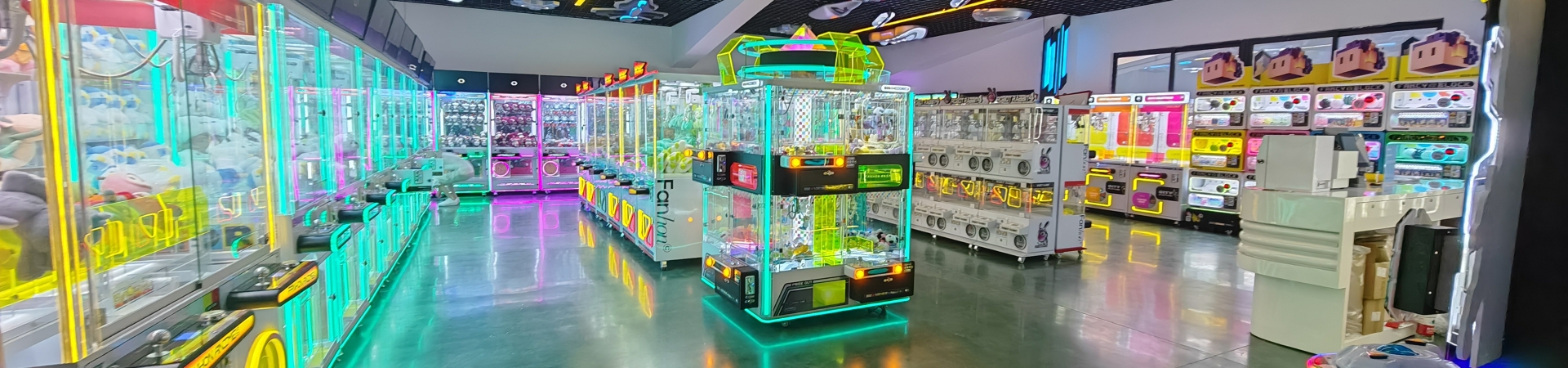
The claw machine business has always been a popular passive investment option for global small and medium investors, thanks to its low entry barriers and impressive profit potential. As smart cloud-controlled claw machines become mainstream and offline immersive entertainment scenarios expand in 2026, the business’s profit system has grown more mature and stable, with far superior profit margins compared to traditional retail, catering and other offline physical industries. This professional profit & margin analysis for claw machine business thoroughly breaks down the project’s revenue composition, full cost structure, gross and net profit levels, actual ROI and practical profit-boosting strategies, helping new investors and venue operators accurately assess project value and avoid common operational losses.
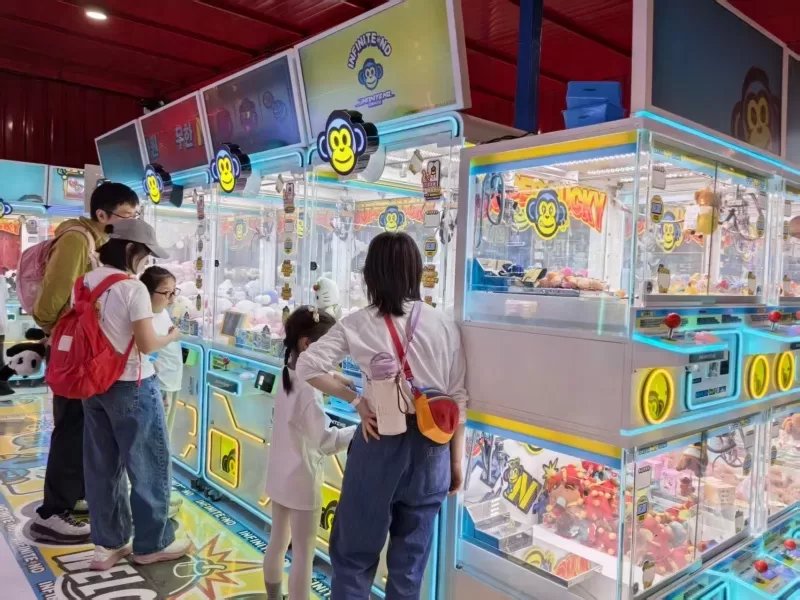
To objectively evaluate the claw machine business profit level, it is essential to refer to real industry operational data. At present, standardized unmanned claw machine projects deliver a stable gross profit margin of 65% to 75%, while the net profit margin remains between 25% and 35% after deducting all fixed and variable expenses. Unlike traditional physical businesses that require continuous labor input and inventory renewal, the claw machine business only requires one-time equipment investment, supports long-term cyclic revenue, and features minimal daily operating consumption, building a highly efficient passive profit model with low risk and high returns.
The revenue source of the claw machine business is simple, clear and sustainable, mainly deriving from users’ coin-operated or mobile scanning play fees. The market adopts differentiated pricing based on venue grades: ordinary community and street venues charge $1 to $2 per game, while high-traffic locations including shopping malls, tourist attractions and entertainment streets set a unit price of $4 to $6 per play. A single properly placed claw machine can achieve a daily revenue of $28 to $70, and core commercial and scenic spot layouts can even hit over $140 in daily turnover, creating steady and lasting cash flow for operators.
The complete cost structure in claw machine margin analysis is divided into initial one-time investment and daily recurring operating costs. The primary upfront expenditure is smart claw machine equipment. Modern probability-adjustable smart devices boast a service life of 3 to 5 years, eliminating frequent equipment replacement costs. Daily recurring costs that directly affect net profit mainly include venue rental, doll procurement, electricity fees and routine maintenance. Among them, doll supply is the largest variable cost, yet it only accounts for 28% to 32% of total turnover. Bulk procurement of plush toys greatly reduces unit cost, forming a huge profit gap between cost and consumer terminal pricing, which constitutes the core advantage of the industry’s high gross profit.
Venue rental is the main fixed cost of the project, with obvious regional and scenario-based differences. Community and street venues feature low monthly rent and stable basic passenger flow, while shopping malls and scenic spots charge higher rent but bring exponential growth in customer traffic and transaction volume. A single claw machine consumes very little electricity daily, and the annual equipment maintenance cost is controlled within 5% of the equipment price. Benefiting from fully unmanned operation, the business saves long-term labor costs, greatly optimizing the overall profit margin. After all deductions, the monthly net profit of a single claw machine stably ranges from $210 to $850, and multi-device centralized layout can achieve superimposed profit growth and scale benefits.
ROI and capital payback period are the core indicators investors focus on in claw machine business investment. Verified by mass actual operation cases, the average payback cycle of the industry is 3 to 8 months. High-quality high-traffic venues can recover all upfront investment in 3 to 5 months, while community and street conventional venues take 4 to 6 months to break even. Compared with traditional offline projects that require more than one year to recover costs, the claw machine business features faster capital turnover, lower financial pressure and smaller investment risks.
It is important to note that scientific and standardized operations can effectively raise the net profit rate of the claw machine business by 10% to 30%. Operators can adjust the machine’s winning probability dynamically according to daily traffic changes: set a reasonable basic probability for flat traffic periods to balance user experience and profitability, and appropriately optimize parameters during peak hours to enhance user participation and re-play willingness. Meanwhile, updating popular and high-cost-performance doll styles regularly can reduce unit procurement costs and improve customer conversion. In addition, multi-scene layout and grouped machine operation can dilute fixed costs such as venue rent and maintenance, further maximizing overall profit margins.
In summary, relying on low variable consumption, unmanned intelligent operation and repeat consumer demand, the claw machine business maintains a high gross profit margin of 65%–75% and a stable net profit margin of over 25%. With the continuous recovery of global offline entertainment consumption and the iterative upgrading of smart devices, the profitability and scalability of the claw machine industry have been further enhanced in 2026. For individual entrepreneurs and small investors seeking low-threshold, high-return and low-risk passive projects, the claw machine business remains one of the most worthy offline investment choices.